In today’s fast-moving world of product development, businesses are always seeking talented professionals who can connect the dots between product design and actual product development. That’s where CAD/CAM jobs come in. CAD stands for Computer-Aided Design, and CAM stands for Computer-Aided Manufacturing. Understanding these isn’t just a nice thing to have anymore-it’s becoming a must if you want to do well in making stuff.
Why Knowing CAD/CAM is Important
Making things isn’t just about putting parts together. From planning out tricky pieces to making sure everything is just right when it’s being made, you need to know your stuff. If you’re good with CAD/CAM, you can:
- Plan out complicated parts quickly and spot on.
- Turn those plans into parts that can actually be made without wasting time.
- Catch mistakes early, so you don’t mess things up when you’re making them.
- Help the design team and the people on the shop floor communicate more effectively.
Businesses really like people who can move smoothly between designing and making. If you have the skills for CAD/CAM jobs, you can work in places like car factories, airplane companies, electronics, and even businesses that make everyday stuff.
How CAD/CAM Opens Up Job Opportunities
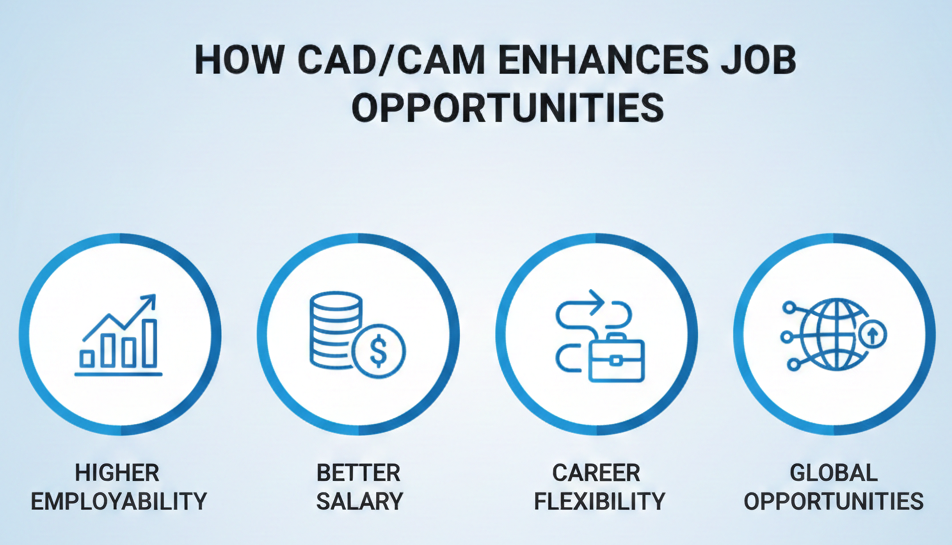
- Easier to Get a Job: Companies that make things want people who know how to use design and machine programs. If you learn CAD/CAM, you’ll stand out when you’re applying for jobs.
- Get Paid More: People who know CAD/CAM can make about 15–25% more than those who don’t, according to what the experts say.
- Do Many Different Jobs: If you know CAD/CAM, you’re not stuck doing just one thing. You can be a CAD designer, CAM programmer, manufacturing engineer, or CNC Programmer.
- Work All Over the World: Making things is a global business. Companies everywhere are adopting CAD/CAM, meaning you can find work in other countries.
Here’s a simple way to see how CAD/CAM skills can help you get a job:
| Skill Set | Job Opportunities | Average Salary |
|---|---|---|
| Basic Knowledge | 5–7 types of jobs | $30,000–$45,000 |
| CAD Only | 8–10 types of jobs | $40,000–$55,000 |
| CAD/CAM Skills | 12–15 types of jobs | $50,000–$70,000 |
Key Benefits of Learning CAD/CAM
- Design and Make Things Faster: Programs like AutoCAD, SolidWorks, or Mastercam let you create precise 3D models, test how things will be made, and avoid big mess-ups.
- Get to Make Things Yourself: CAM tools let you create codes for CNC machines and get a sense of how machines work, so you get real practice.
- Learn to Solve Problems: When you use CAD/CAM systems, they teach you how to figure out design problems before they cause issues when you’re making things.
- Grow in Your Job: Companies appreciate workers who can handle everything from start to finish. Knowing the skills for CAD/CAM jobs can help you get promoted or do more specialized work.
Tips to Make Your CAD/CAM Career Better
- Stay Up-to-Date: Manufacturing programs keep changing. If you keep up with the newest versions, companies will still want you.
- Build a Portfolio: Put your CAD designs and CAM projects online. Showing real examples is better than just having certificates.
- Mix Skills: Combine CAD/CAM with other skills, such as 3D printing, robotics, or simulation software, to be even more appealing.
- Get Experience: Working in workshops or factories can further develop your technical and problem-solving skills.
If you do these things, you can make yourself a great candidate for CAD/CAM jobs, whether you’re just starting or trying to learn new skills.
Conclusion
In short, mastering CAD/CAM isn’t just about learning programs-it’s about becoming someone who can design, figure things out, and make things with great accuracy. If you can be creative, know your stuff technically, and solve problems, you’ll be a star in the world of manufacturing jobs. If you want a promising career in making things, learning CAD/CAM is a great way to get there.
FAQs
Q1. What’s the difference between CAD and CAM?
CAD is about planning out products on a computer, while CAM is about turning those plans into instructions for the machines that make them. Together, they make the whole process easier.
Q2. Do I need experience to get a CAD/CAM job?
Not always. It helps if you know about mechanics or design, but there are jobs for beginners if you’ve done CAD/CAM training.
Q3. What types of companies hire people who know CAD/CAM?
Companies that make cars, airplanes, electronics, medical devices, and big machines really value CAD/CAM skills.
Contact Us
📞 +91 99137 89065