
If you’re in charge of a factory or any kind of industrial operation, you know that when machines stop working, it can cause a significant slowdown. Every minute a machine isn’t running, you’re losing money and falling behind. But what if you could get a deeper understanding of your machines so you could fix problems before they turn into big disasters? That’s where reverse engineering comes in handy. It’s not just a complicated tech idea; it’s an effective way to reduce machine downtime and keep them out of action. When engineers look at how machines are put together and how they work, they can improve performance, spot potential failures, and even make new parts more quickly.
Let’s look at how this works and why it’s essential.
Understanding Reverse Engineering
It means taking a machine or a part of a machine and figuring out how it works by looking at all the little pieces. This might involve:
- Looking closely at the design of each part.
- Measuring everything very carefully.
- Figuring out what materials were used to make it.
- Seeing how everything fits together and moves.
With this information, engineers can find and fix problems faster. Instead of waiting for something to break, they can often tell when something is about to fail and stop it before it causes trouble, which helps reduce machine downtime.
Why Downtime Happens
Machine downtime can happen for all kinds of reasons:
- Parts get old and worn down.
- Maintenance isn’t done well, or there aren’t enough spare parts.
- The software or computer systems mess up.
- There are mistakes in the way the machine was designed that nobody noticed at first.
You can prevent many of these problems if you know all the details about how a machine is made and how it’s supposed to work. Reverse engineering gives you that information, and you will see the machine in detail.
How Reverse Engineering Reduces Downtime
Here’s how figuring out how machines work can help you keep them running:
- Get Replacement Parts Fast: Sometimes you just can’t find the original parts, especially for older machines. By reverse engineering, you can create an identical new one. This means your machine won’t be sitting idle for long.
- Improved Maintenance: When engineers truly understand how a machine is put together, they can determine the best way to maintain it. You can set up a schedule to check and replace parts before they cause problems, which can significantly reduce machine downtime.
- Save Money: When machines aren’t running, you don’t just lose production. You also have to pay for emergency repairs, which can be really expensive. Identifying a machine’s weak spots lets you fix them affordably before they break down.
- Make Machines Better: Older machines often lack the latest features to save energy and work faster. By examining the machine carefully and understanding how it works, you can make design changes to improve it, so it runs more smoothly and breaks down less often in the future.
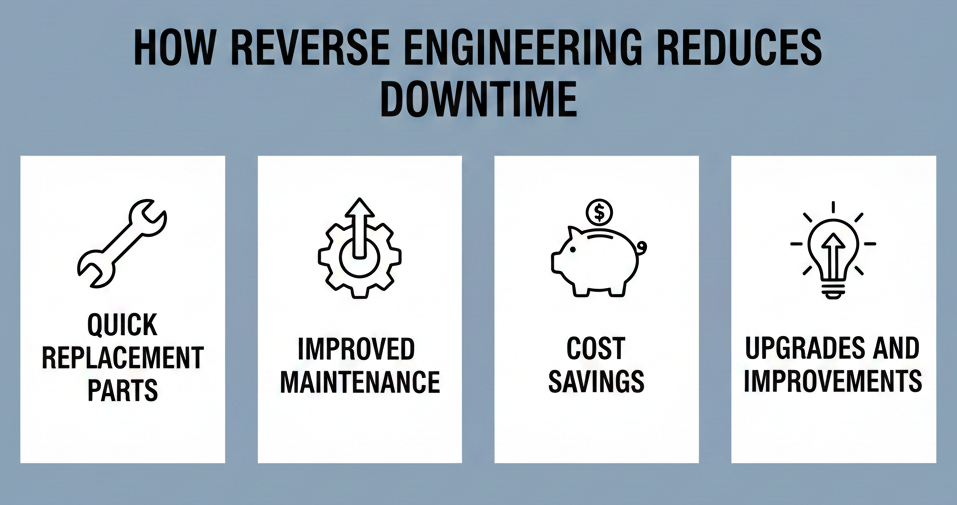
Downtime Reduction Through Reverse Engineering
Here’s an example of downtime reduction:
| Problem | Downtime Before (hrs) | Downtime After (hrs) | Improvement (%) |
|---|---|---|---|
| Custom gear broke | 24 | 4 | 83% |
| Hydraulic pump failure | 18 | 6 | 67% |
| Worn-out conveyor belt | 12 | 3 | 75% |
Real-Life Applications
Lots of different industries use this process to keep their machines running:
- Manufacturing: Making new parts for machines that don’t exist anymore.
- Automotive: Repairing engines and other parts when OEM parts are unavailable
- Aerospace: Making sure essential equipment doesn’t break while in use.
- Energy Industry: Keeping things like turbines and generators working properly.
In each of these cases, knowing every detail about the machine allows engineers to fix problems faster and more intelligently. This prevents extended shutdowns that can disrupt production.
In Conclusion
Keeping machines running smoothly is super crucial for any business that makes things, and reverse engineering is a great way to do it. If you really understand your machines, you can create replacement parts, plan maintenance, and stop costly shutdowns, all of which reduce machine downtime. This not only keeps your machines going but also makes your whole operation more productive and efficient.
Spending time and money on reverse engineering seems like an extra step, but it saves you a lot of money in the long run. If you want to keep your machines running and avoid losses, it’s a smart move.
FAQs
1. Can reverse engineering be used on any kind of machine?
Yes, any machine can be taken apart and studied, from simple tools to complicated computer systems.
2. How long does it take to figure out how a machine part works?
It depends on how complex it is, but modern tools like 3D scanners and design software can speed things up.
3. Is reverse engineering expensive?
There is some initial cost, but it often saves you money by reducing downtime, preventing emergency repairs, and extending the life of your machines.
Contact Us!
📞 +91 99137 89065